
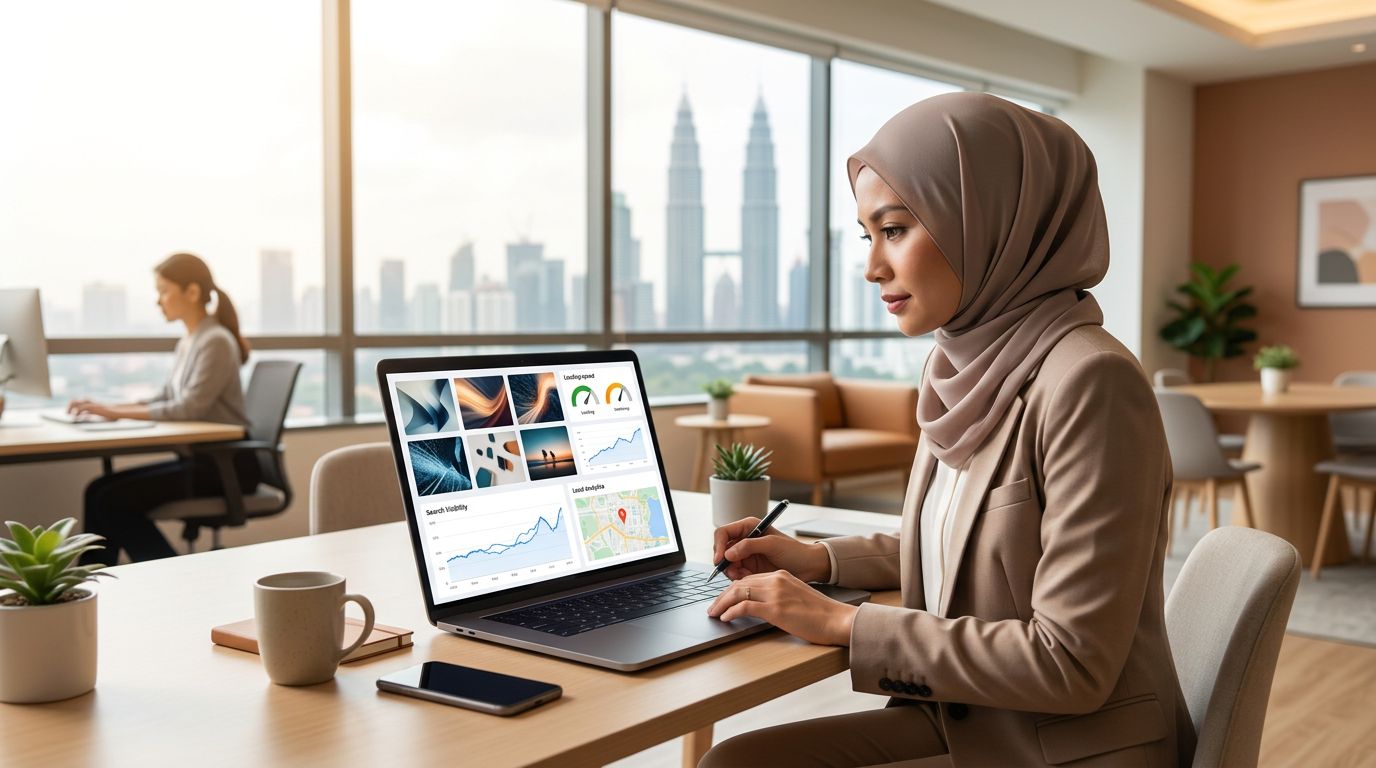
A slow, unnamed photo can hide a service page almost as effectively as a locked shopfront. For Malaysian clinics, contractors, professional firms, and education centres, images should support the path from search to enquiry.
Image SEO Malaysia is part of broader search engine optimization, making website visuals easy to load, understand, and connect to a customer’s needs. Done well, it supports accessibility and local relevance, gives on-page SEO clearer service context, attracts organic traffic, and builds trust behind calls, bookings, WhatsApp messages, and sales.
Key Takeaways
- Use original, properly sized images with descriptive filenames, helpful alt text, and relevant surrounding service copy.
- Improve mobile performance with modern formats, compression, responsive image delivery, image dimensions, and careful lazy-loading to support Core Web Vitals.
- Add genuine local and business context through accurate service areas, nearby content, consistent business details, and appropriate structured data.
- Connect image SEO with technical SEO, local SEO, useful content, internal linking, AEO, and GEO to improve visibility across traditional and AI search.
- Choose an SEO partner that audits image and page issues, protects customer privacy, and measures success through enquiries, calls, bookings, WhatsApp leads, or sales.
Image SEO Malaysia checklist for service websites
The direct answer is simple: use original, properly sized images with descriptive filenames and useful alt text, then place them beside relevant service copy. Search engines need context, while potential customers need proof that your business is credible and local.
Use this checklist when reviewing a WordPress, Shopify, WooCommerce, or custom-built site. For product and variant images, include image handling in an e-commerce SEO workflow rather than treating platform settings as a complete solution:
- Upload original photos of your team, premises, completed work, equipment, or client-facing process where possible.
- Use keyword research to identify genuine service and location wording before naming files. For local SEO, reflect locations you actually serve in filenames, alt text, and nearby service-area copy. Research should inform wording, not force a term into alt text.
- Rename files before upload.
kuala-lumpur-aircon-service-technician.webpis clearer thanIMG_2948.webp. - Write alt text that describes the image and its purpose. Avoid repeating the same keyword on every image.
- Match each image to the search intent it supports, whether it shows proof, process, premises, or local relevance.
- Use WebP or AVIF where your content management system supports it. Compress files to reduce page weight while preserving quality.
- Add image width and height attributes, then check Core Web Vitals to reduce layout shifts and loading delays.
- Use responsive image sizes so mobile visitors do not download a desktop-sized file.
- Keep the main page image visible early. Do not lazy-load the largest image near the top of a page.
- Place visuals near supporting headings, service details, testimonials, and contact prompts.
- Use competitor analysis to benchmark image coverage and quality, not to copy competitors’ filenames or wording.
A generic stock image may improve the page design, yet it rarely proves your experience, location, or service quality.
A meaningful image supports on-page SEO because it sits within a page that clearly explains a service. Headings, title tags, meta descriptions, and nearby service copy add context, but they don’t replace descriptive alt text. A photograph of a Selangor renovation project, for example, belongs beside the relevant project description, service area, and enquiry option.
Make images fast on mobile devices
Mobile visitors often compare several providers within minutes. Fast image delivery supports mobile responsiveness and a smoother user experience. If your service photos take too long to appear, the page feels unreliable before anyone reads your credentials.
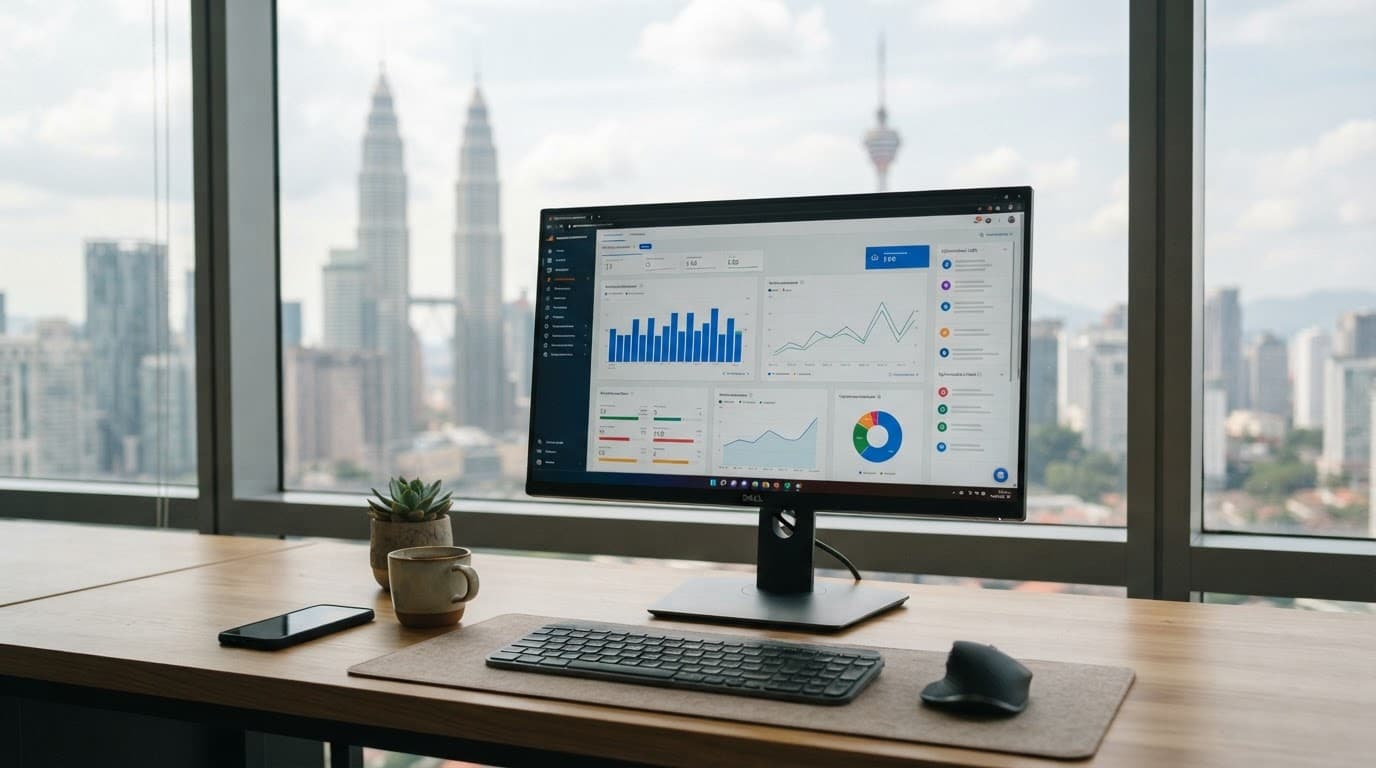
Start with file dimensions. Compare the displayed dimensions with the source dimensions. A banner displayed at 1,200 pixels wide should not begin as a 6,000-pixel camera file. Resize it to the largest practical display size, then compress it without turning text, faces, or finished work into a blurry mess. Use responsive delivery for different screen sizes, and don’t lazy-load the largest above-the-fold image.
Next, review Core Web Vitals in Google Search Console and PageSpeed Insights. Large image files can delay LCP, while missing dimensions can cause layout shift. These are one group of ranking factors to monitor, not a guarantee of rankings. Technical SEO work should identify the specific templates responsible, such as WordPress service pages, portfolio archives, or location pages.
Google’s guidance for generative AI search features reinforces the same starting point: pages need to be crawlable, accessible, useful, and technically sound. AI features do not remove the need for fast, well-structured websites.
Image sitemaps can help when photography is central to the business, particularly for galleries and large project portfolios. They are less useful than fixing weak page structure, blocked media files, or slow templates.
Give visuals local context and business meaning
Alt text should describe what is visible without stuffing locations or services into every line. For example, “Technician inspecting a wall-mounted air conditioner in a Petaling Jaya office” gives both users and search systems useful context.
The surrounding page carries equal weight. A contractor’s project image should sit beside the project type, materials, location served, and service explanation. Similarly, a clinic can pair staff or treatment-room images with clear information about appointments, qualifications, and patient expectations.
Use English, Bahasa Malaysia, or Chinese copy according to your audience and existing site structure. Keyword research can reveal customers’ service, treatment, and location language, but alt text should focus on what is visible, not a keyword list. Don’t create duplicate pages that differ only by translated alt text. Each language page needs its own helpful service content and a logical internal linking path.
Strong local SEO also depends on consistency. Keep the business name, phone number, address, service areas, and Google Business Profile details aligned with the website. Add current photos to the profile, but don’t rely on image metadata or GPS data as a shortcut to map rankings.
Relevant schema markup is a form of structured data that can clarify the relationship between your organisation, logo, pages, and service information. LocalBusiness, Service, FAQ, and ImageObject markup may fit certain pages, provided the visible content supports it. Markup does not compensate for thin pages or irrelevant photos.
Where image SEO meets AI SEO, AEO, and GEO
Visual optimisation is one part of a broader AI SEO approach. Google AI Overviews, answer engines, and generative AI platforms need clear evidence about who a business is, what it offers, where it operates, and which questions it can answer.
Keyword research should map service pages, FAQs, and images to real customer questions and demand. Each important image should support a well-built content system. Service pages need descriptive headings, concise explanations, clear contact details, and evidence such as project photos or credentials. Internal linking should connect the service page, supporting FAQ, location page, and visual evidence.
An AI SEO Agency should connect image work with useful content, technical SEO, local SEO, and conversion tracking. The objective is not image impressions in isolation. It is organic traffic that produces enquiries, calls, bookings, and sales.
Google’s May 2026 update on AI search optimisation stresses useful, original material rather than special tricks for generative results. Answer Engine Optimisation (AEO) helps pages answer practical questions clearly. Generative Engine Optimisation (GEO) may help systems interpret and reference the business.
In SEO Malaysia campaigns, this may include a lawyer’s service-page FAQ, a tuition centre’s programme details, or a B2B supplier’s technical specifications. Competitor analysis can reveal unanswered questions or weak visual proof, without turning the strategy into imitation. Images should reinforce those answers, not replace them.
What a reliable Malaysian SEO partner should check

When assessing an SEO provider, choose an SEO agency Malaysia service with an audit-first process, rather than automated batches of rewritten alt text. A Malaysia-based AI SEO agency should audit missing files, oversized assets, duplicate images, poor mobile delivery, thin service pages, and unclear enquiry paths. It should check Core Web Vitals, using keyword research to assess demand and competitor analysis to benchmark service-proof gaps.
A trusted AI SEO agency will also show how image work connects to measurable business activity:
- Reports should connect organic performance to calls, forms, bookings, WhatsApp leads, or sales, and show the conversion rate when tracking is available.
- Recommendations should explain why each template, image group, or service page needs work, and how assets support wider digital marketing activity.
- The scope should separate image compression from authority work, including link building and backlink profile review, within a wider SEO engagement. It should assign practical ownership, so your team knows who will photograph, approve, upload, and maintain visual assets.
Costs vary with the number of pages, image library, website platform, language versions, custom photography needs, and required technical fixes. A small Kuala Lumpur professional firm needs a different scope from a national catalogue requiring e-commerce SEO or a multi-location clinic.
Build an image library that earns trust
Treat every approved business photo as a reusable asset. Store the original file, web version, service category, location, usage permission, and short description. This makes future website updates, Google Business Profile posts, case studies, social content, and content marketing campaigns easier to manage.
Avoid publishing identifiable customer images without clear permission. For project work, show outcomes that matter: a completed installation, a clean workspace, a technician at work, or a real team member. Authentic imagery often answers the unspoken question behind every service search: “Can I trust this business?”
Conclusion
Strong image optimisation helps customers understand your business before they contact you. It also gives search engines and AI systems clearer evidence about your services, locations, and experience.
The best results come from combining fast visuals, helpful copy, technical SEO, and accurate local business information to build organic traffic over time.
Looking for SEO services Malaysia? request an SEO review with PixelPro.
Frequently asked questions
Does image SEO alone rank a Malaysian service website?
No. Image SEO supports search engine optimization, but it is only one of many ranking factors. It cannot replace useful service content, technical health, local SEO, authority signals, or user relevance. A page ranks more reliably when its images, headings, internal links, schema markup, and contact details all support the same service intent.
How long does image SEO take to affect Google visibility?
Image compression, filename changes, and alt-text improvements can be implemented quickly. However, organic rankings depend on crawling, indexation, page competition, content quality, website authority, and user relevance. Track changes through Search Console and lead data instead of expecting a fixed page-one timeline.
Do Google AI Overviews need special image markup?
There is no special image markup that guarantees inclusion in an AI Overview. For Answer Engine Optimisation, maintain crawlable pages, useful content, accurate structured data where appropriate, and original visuals that support the subject of the page. These fundamentals also help other AI search platforms understand your business.
