
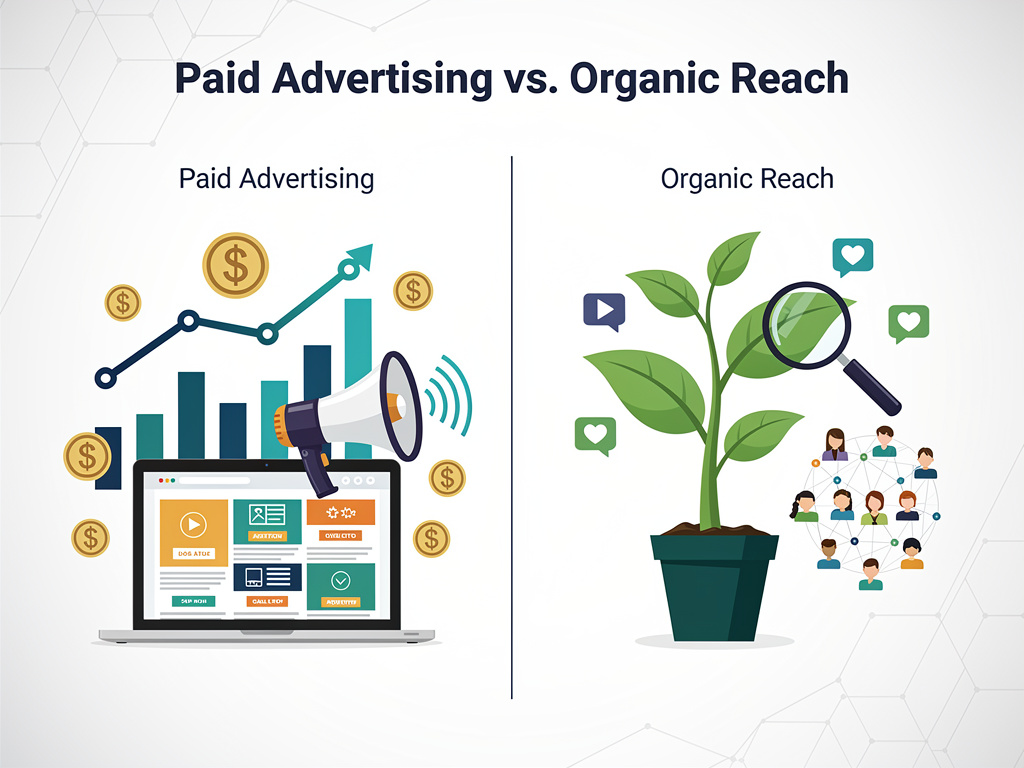
When deciding between paid advertising and organic reach for your business, it’s important to understand the strengths and limitations of each approach. Both can play significant roles in your overall online marketing strategy, and the right choice depends on factors like your goals, budget, timeline, and industry.
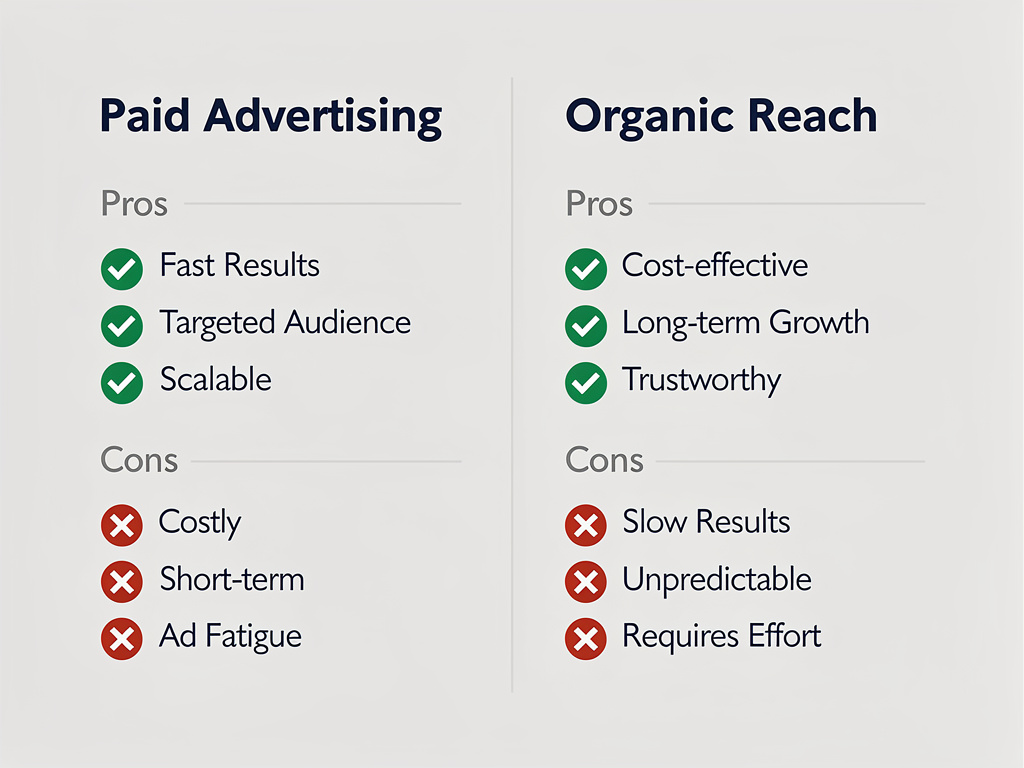
Paid advertising involves paying to place your ads in front of your target audience, whether on search engines, social media, websites, or other platforms.
Pros:
1. Immediate Results: With paid ads, you can quickly get your message in front of your audience. This is ideal for campaigns with short timelines or when you need immediate sales or traffic.
2. Targeting Precision: You can target specific demographics, interests, behaviours, locations, and even devices. This ensures your ad spend is used efficiently.
3. Scalability: As long as you have the budget, you can scale your ads to reach more people, making it easier to test and optimize for better performance.
4. Brand Visibility: Paid ads can increase brand awareness, particularly on platforms where competition for organic visibility is high (e.g., Google, Facebook, Instagram).
Cons:
1. Cost: The main downside of paid advertising is the cost. Depending on your industry and the competitiveness of your keywords or target audience, it can get expensive.
2. Sustainability: Once you stop paying for ads, the visibility disappears. This makes it a less sustainable option if you rely solely on paid ads long-term.
3. Ad Fatigue: Over time, your audience may become fatigued by seeing the same ads, leading to diminishing returns unless you refresh your ad creatives.
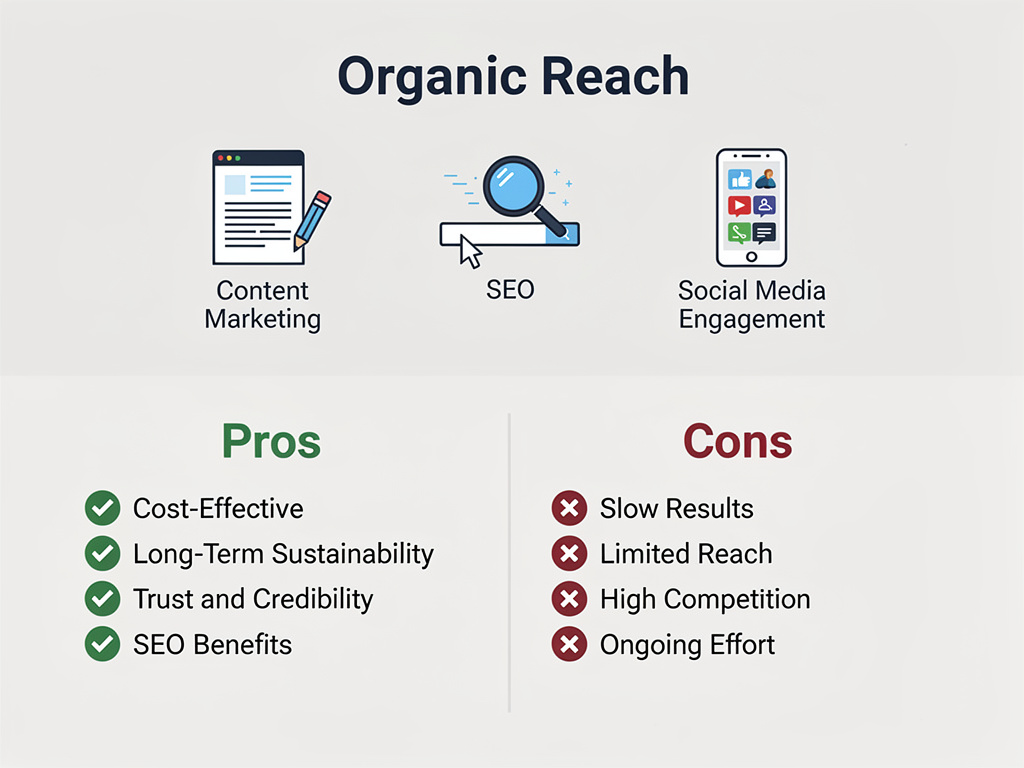
Organic reach refers to the free methods used to increase visibility, such as content marketing, SEO (search engine optimization), and social media engagement.
Pros:
1. Cost-Effective: Unlike paid ads, organic strategies typically require fewer direct financial investments, though they may require time and effort (e.g., content creation, SEO).
2. Long-Term Sustainability: Content and social media posts that perform well can continue to drive traffic and engagement long after they’re published.
3. Trust and Credibility: Organic content (such as blog posts, reviews, or social media interactions) can build stronger relationships and trust with your audience.
4. SEO Benefits: High-quality, well-optimized content can appear in search engine results without ongoing costs, leading to continual traffic over time.
Cons:
1. Slow Results: Organic reach takes time to build. SEO, for instance, can take months before seeing significant results.
2. Limited Reach: With organic social media posts, especially on platforms like Facebook, algorithms may limit the organic reach of your posts to a smaller portion of your followers, requiring more effort to expand visibility.
3. High Competition: Ranking organically in search engines can be challenging due to the vast amount of content online. Without consistent effort and optimization, it can be hard to stand out.
4. Ongoing Effort: Organic strategies require continuous work, whether it’s creating fresh content, engaging with your audience, or optimizing your website.
Which Is Right for Your Business?
You might consider Paid Advertising if:
– You need quick results or to jumpstart your marketing efforts.
– You have a clear budget and the ability to invest in continuous paid campaigns.
– You need to target specific audiences, such as by location, interest, or behaviour.
– Your business is in a competitive industry where organic reach alone may not be sufficient.
Or you might consider Organic Reach method if:
– You are focused on long-term brand growth and want to build a loyal customer base.
– You have the time to consistently create high-quality content or manage your social media presence.
– You have a limited budget and want to maximize ROI with little or no direct spend.
– You are in a less competitive niche or have expertise that allows you to stand out with quality content.
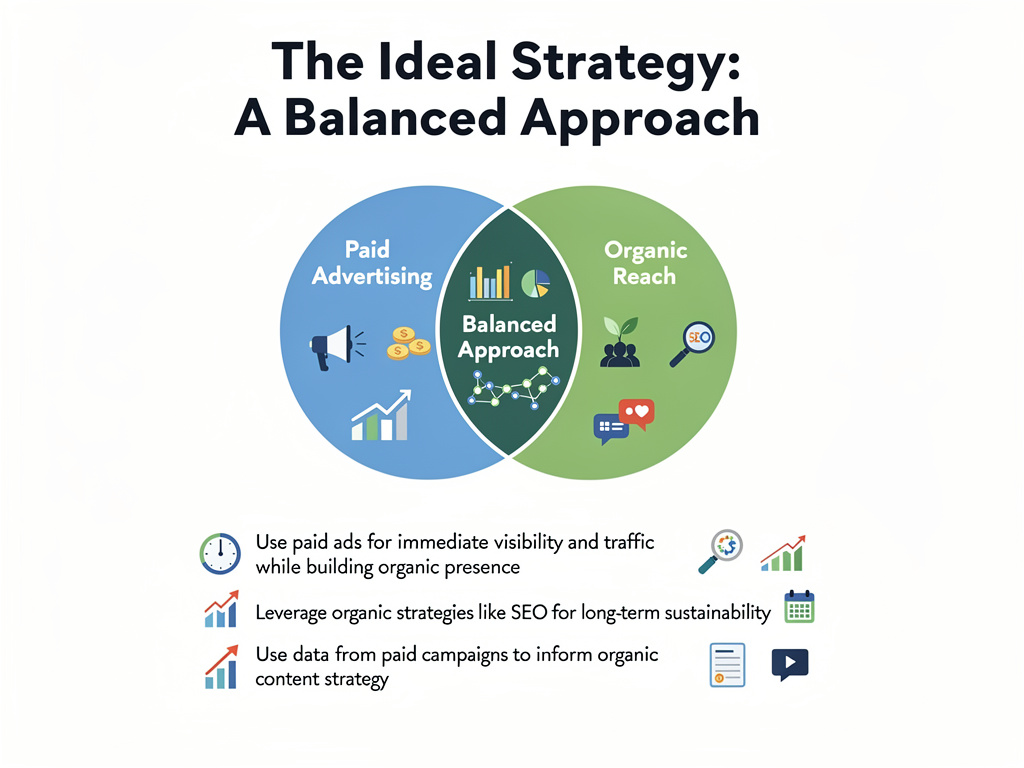
The Ideal Strategy: A Balanced Approach
For most businesses, the best approach is a combination of both paid advertising and organic reach. Here’s how:
– Use paid ads for immediate visibility and traffic while you build up your organic presence over time.
– Leverage organic strategies like SEO to ensure long-term sustainability, and integrate social media and blogging for content marketing to foster ongoing engagement.
– Use the data from paid campaigns (e.g., keywords, or demographics perform best) to inform your organic content strategy.
Closing in, paid advertising works best when you need fast, targeted results, while organic reach is more suitable for long-term growth and building credibility. By blending the two, you can create a robust digital marketing strategy that capitalizes on both immediate impact and sustainable success.
