
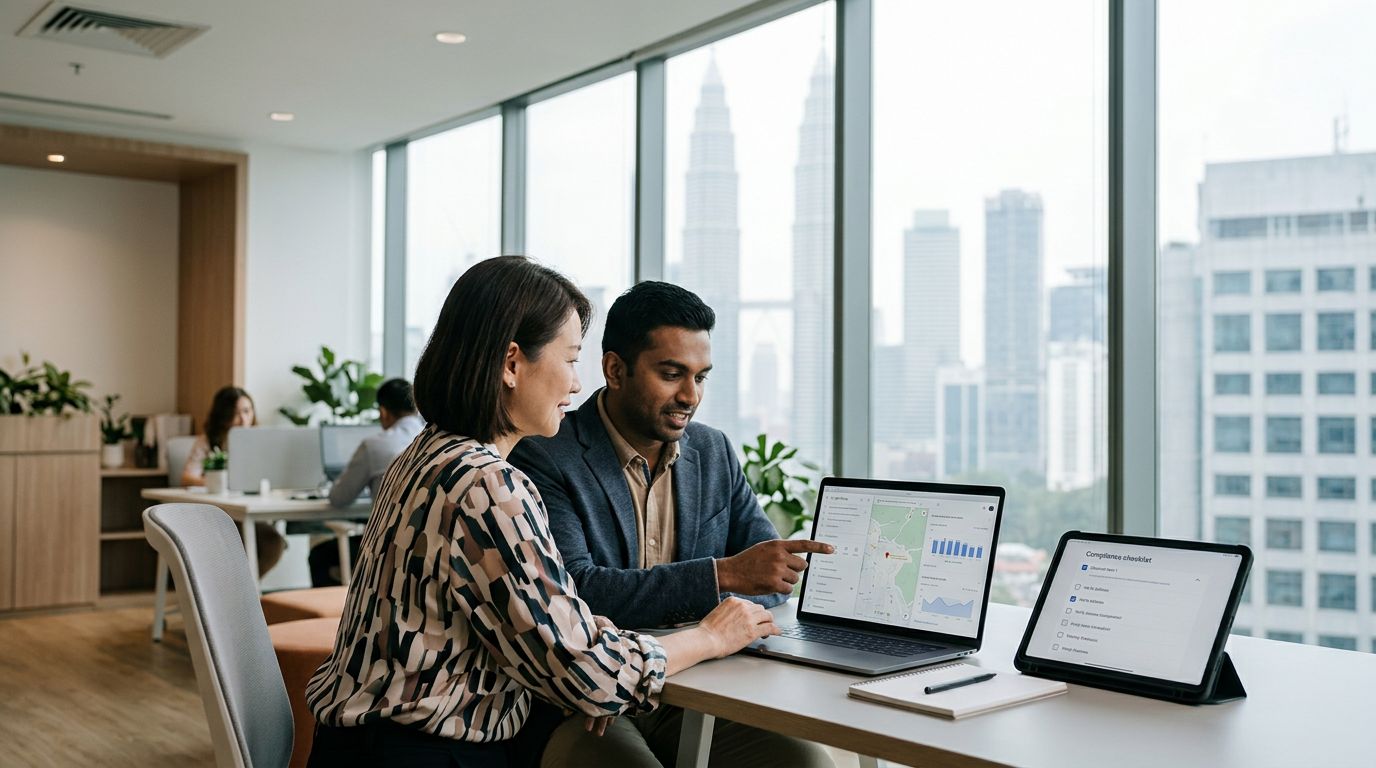
A Google Business Profile suspension can stop calls, direction requests, and walk-in enquiries overnight. For Malaysian SMEs, the fastest recovery path is to stop editing the profile, find the real policy issue, fix every mismatch, and submit an appeal through your Google account with proof that the business is genuine.
That matters because a business profile suspension usually comes from something concrete, not bad luck. Issues like duplicate listings, category misuse, risky profile edits, or inconsistent business details often trigger these restrictions. The first step in your recovery journey is knowing what type of suspension you have.
Key Takeaways
- Identify the Suspension Type: Determine if you are facing a soft suspension, which affects visibility, or a hard suspension, which removes the listing entirely, as this dictates your recovery strategy.
- Audit for Compliance: Regularly check your business name for keyword stuffing, verify your address against SSM records, and ensure your business category is accurate to avoid common policy triggers.
- Standardize Your Data: Ensure your business name, address, phone number, and website URL are consistent across your Google profile, company website, and official government registrations.
- Submit Evidence-Based Appeals: Avoid repetitive or emotional appeals; instead, provide a concise explanation of the fix backed by strong documentation like utility bills, business licenses, and signage photos.
- Maintain Consistent Updates: Refrain from making sudden, mass edits to your profile while an appeal is pending, as this can trigger further scrutiny from Google’s automated systems.
Know whether you have a soft suspension or a hard suspension
Not every account issue looks the same. Some businesses notice their profile remains in the dashboard, but customers cannot find it on Google Search or Maps. Others receive a direct notification stating the account is disabled, resulting in an immediate loss of public visibility.
This quick comparison helps you identify your current situation.
| Type | What you usually see | What it means for the business |
|---|---|---|
| Soft suspension | The profile may stay in your dashboard, but visibility drops or verification is affected | Customers may stop finding you on Maps, even though the listing still appears in your account |
| Hard suspension | Google shows a suspended or disabled notice | The listing is removed from public view and usually needs a formal reinstatement appeal |
For a retail shop in Petaling Jaya, a soft suspension can mean fewer direction requests and sudden drops in store visits. For a clinic, law firm, or tuition centre, a hard suspension can wipe out branded searches and phone leads within days. Service-area businesses feel it too, as a contractor or aircon service company may lose critical Google Maps visibility across its main service zone.
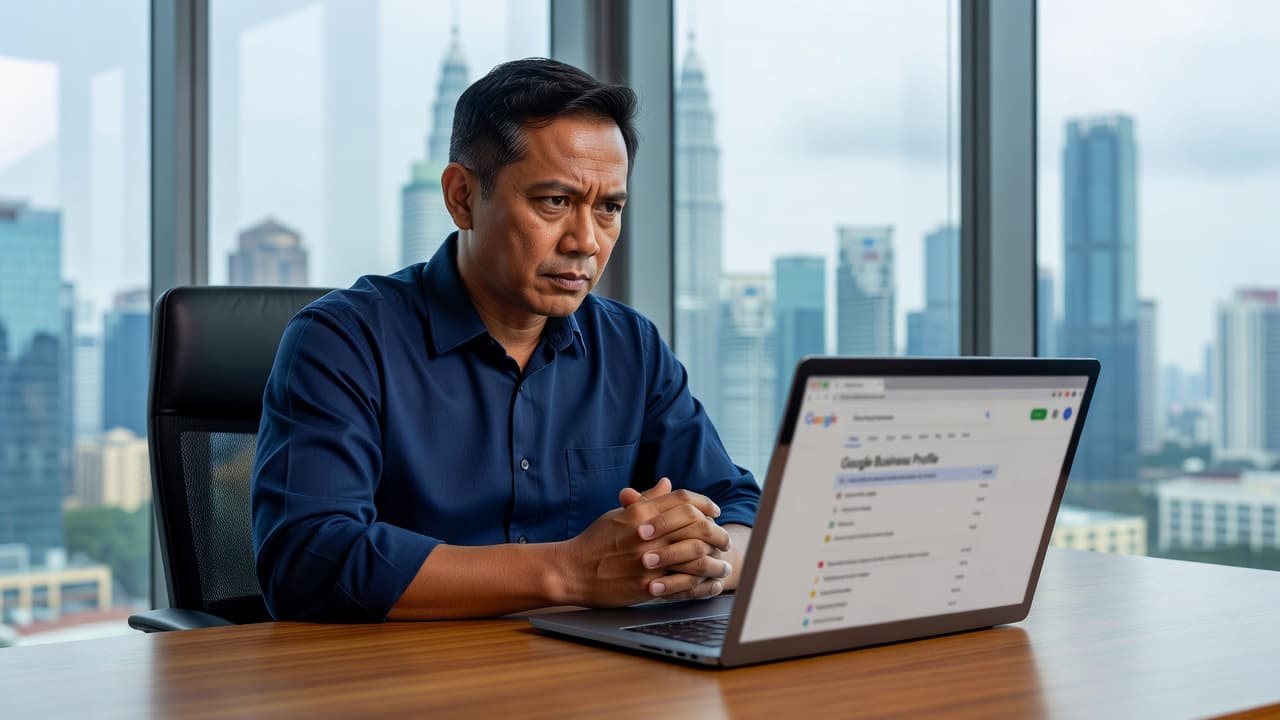
A Google Business Profile suspension is more than a simple listing problem. It damages your local SEO, brand trust, and lead flow. If your profile was a major source of calls, the loss can feel like turning off a shop sign during business hours, which negatively impacts your overall Google account authority and reputation.
Why Google suspends Business Profiles in 2026
Google states that profiles may be suspended when they break Google Business Profile guidelines, as explained in its guide to fix suspended or disabled profiles. In practice, a policy violation often triggers this issue for Malaysian SMEs.
The first common issue involves the business address. Google frequently flags listings that use a virtual office, a PO box, or addresses that do not appear to be staffed during stated hours. A service area business that operates from home can also run into trouble if they show a public address when customers do not visit that location.
Next comes the business name. Many owners engage in keyword stuffing by adding city names, services, or selling points into their profile title. A listing called ABC Dental Clinic Bangsar Best Braces may rank better for a while, but it also raises the risk of a penalty if that is not the official name displayed on signage and legal documents.
Google also monitors duplicate listings closely, which remains a leading cause for a Google business profile suspension. This happens when a second profile exists for the same shop, branch, or service area. Sometimes these duplicates are created by an old staff member, a past marketing agency, or an auto-generated map entry.
Another trigger is category misuse. A law firm should not list itself as a marketing agency, and a tuition centre should not pick an overly broad category just to capture more search traffic. Google also pays attention to deceptive content, such as spammy descriptions or large, sudden edits to your profile. Changing the name, address, phone number, category, and hours in one session can look suspicious to automated systems.
Finally, inconsistencies across the web create trust issues. If your website shows one phone number, your Google profile shows another, and your SSM records show a third variation, the platform may flag the listing. A suspension often happens when service areas are unrealistically large or when the provided business address details do not align with real-world evidence.
In 2026, automated checks are stricter than ever. Robotic profile text, suspicious review patterns, and mass edits from a single account can all increase the likelihood of being flagged.
A recovery checklist that works
When a Google business profile suspension is handled calmly, the odds of a successful recovery improve. Panic edits usually make things worse, so follow these steps in order.
- Stop changing the profile for a moment. If the listing is already suspended, keep new edits to a minimum until you have identified the issue. Random fixes can muddy the record and make your appeal weaker.
- Audit the core details against real documents. Check your exact business name, business address, phone number, main category, website URL, and hours. Match them to your SSM registration, signage, invoices, business licence, and website. If you are a service area business, hide the address if customers do not visit that location.
- Review the profile for rule-breaking content. Remove keyword stuffing from the business name. Check the description for promotional claims, phone numbers, or extra location names that do not belong there. Look at photos as well. If images show a different brand or unclear premises, replace them later, after the appeal if needed.
- Search for duplicates and outdated profiles. Look for old listings created by previous staff, past branches, or map users. A restaurant that moved from Shah Alam to Subang, for example, may still have an outdated listing online. Duplicate suppression or cleanup often needs to happen before reinstatement makes sense.
- Make your website and public details consistent. Your contact page should match the Google profile exactly for name, address, and phone. For service businesses, your service area, business type, and local landing pages should all support the same story. If your local visibility problem goes beyond the profile itself, professional SEO services in Malaysia can help align your website SEO, location signals, and broader search presence.
- Gather proof before filing the appeal. Do not submit a reinstatement request with vague explanations. When you provide evidence, use the official appeal tool to support your case. Google Business Profile reinstatement works better when the evidence provided via your reinstatement request is simple, current, and easy to verify.
- Submit one clean appeal, then watch your email closely. When you submit an appeal, use a short explanation that states what was wrong, what you corrected, and which documents prove the business is legitimate. Always include your business profile id to help the team manage appeals more efficiently. If support replies, keep responding inside the same case thread. That matches the guidance seen in a Google support discussion on suspended profiles.
What documents to prepare and how long recovery takes
Most appeals fail because, although the business is real, the supporting proof is weak. You must provide evidence that connects your listing to a genuine entity operating at the stated location. To succeed, you should provide evidence through a combination of utility bills, a business license, and official registration that leaves no room for doubt.
For Malaysian SMEs, the strongest official documents often include:
- SSM registration or equivalent business registration
- Local council licence, if relevant to your trade
- Utility bill or tenancy agreement that matches the business address
- Clear photos of permanent signage outside the premises
- Interior photos that show the business operating normally
- Website contact details that match the listing exactly
- For a service area business, vehicle branding, tools, uniforms, or job-site evidence tied to the business name
A clinic, law firm, or tuition centre may also have industry-specific paperwork that supports legitimacy. Meanwhile, contractors, cleaning services, and other mobile businesses should show that they operate from a real base and travel to customers rather than using a borrowed address.
The best appeal is not the longest one. It is the one with the clearest proof.
Timelines vary significantly based on your specific situation. Some soft suspension cases recover within a few days after re-verification, while many hard suspension appeals take one to three weeks. If your recovery involves a storefront verification, the process may be more straightforward than complex address disputes. Furthermore, cases involving duplicates or thin documentation can prolong your Google business profile suspension recovery. If your business was impacted during a wider suspension sweep, please note that the review queue may move more slowly.
Mistakes that slow down reinstatement
Many owners hurt their own case without realizing it. The most common mistake is filing repeated appeals before fixing the profile. Addressing a Google business profile suspension linked to your Google account requires patience; sending multiple requests tells Google you want the listing back, but it does not prove that your business data is now trustworthy.
Another mistake is editing major details while the appeal is pending. If you change your address, category, business name, or hours after filing, support may trigger an additional review or place an account restriction on your profile while they struggle to verify which version is correct. A better approach is to fix the essentials first, document them, and then stay consistent.
Some businesses also submit the wrong kind of proof. A business card alone is weak, and a blurred photo of a door with no signage is rarely enough. You must provide evidence that clearly displays your registered business name, such as official utility bills or government registration documents. Never submit fake documents, as they can turn a recoverable Google Maps listing suspension into a long-term trust problem.
Website inconsistency is another silent issue. If your Google profile says Klang Valley only but your website claims nationwide service, the signals conflict. If the business name on the site differs from the name on SSM and Google, the case becomes significantly harder to win.
After recovery, update the profile carefully. Avoid large edit bursts. Keep categories honest. Maintain consistent contact details across your site, social pages, and local citations. Business listing recovery is only part of the job. Stable visibility depends on a solid website, good content, and clean business data.
Frequently Asked Questions
How long does it usually take to recover a suspended Google Business Profile?
The recovery timeline varies based on the complexity of your issue, with soft suspensions often clearing in a few days and hard suspensions typically taking one to three weeks. Complex cases involving multiple address disputes or poor documentation may take longer to resolve.
Can I continue to edit my profile while waiting for an appeal response?
No, you should stop all edits to your profile as soon as you submit your appeal. Making changes to your business name, address, or categories while under review can lead to further account restrictions or confuse the support team, potentially delaying your reinstatement.
What documents are most effective for a reinstatement appeal?
The most effective evidence consists of official documents that prove your business operates legally and physically at the stated location. This includes your SSM registration, local council licenses, recent utility bills, and clear photographs showing permanent exterior signage and the interior of your workspace.
Why was my profile suspended even though I didn’t change anything?
Suspensions are often triggered by automated system updates that detect inconsistencies between your profile and third-party data sources, or by reports of duplicate listings. Even if you haven’t made recent changes, Google may flag your account if it detects keyword stuffing, outdated information, or a sudden mismatch between your online details and your registered business records.
Conclusion
A successful google business profile suspension recovery usually comes down to one thing: your listing must align with a real business in the physical world. When your name, address, category, website, and supporting documents all match, your appeal has a much better chance of success. Always ensure your business details strictly adhere to Google Business Profile guidelines to prevent future issues.
For Malaysian SMEs, the smartest move is to treat reinstatement as both a repair job and a local SEO clean-up. When you submit your appeal, be prepared to provide evidence that confirms your business legitimacy to ensure the profile’s long-term stability. Fix the root issue, document it well, and avoid rushed edits that create new problems.
If your business needs help with a suspended listing, a local SEO review, or a wider website check, you can speak with an SEO consultant for a practical next step.
